

The Complete Guide to Korean Canthoplasty: Everything About Medial, Lateral, Lower, and Upper Canthoplasty
Canthoplasty, which involves precisely refining the corners of the eyes, is a high-level surgical procedure that is fundamentally different from simple "double eyelid surgery." The eye structure of Asians has anatomical proportions that are fundamentally different from those of Westerners, and the Korean medical aesthetics field has developed world-class correction techniques for four vectors (superomedial, inferomedial, lateral, and inferior) optimized for this Asian eye structure. This is why tens of thousands of foreign patients visit Korea every year for more harmonious eyes. This guide provides clinical and practical information to help foreign patients considering surgery make informed decisions, from consultation to recovery after returning home.
What is Canthoplasty? – 4 Correction Techniques for Asian Eyes
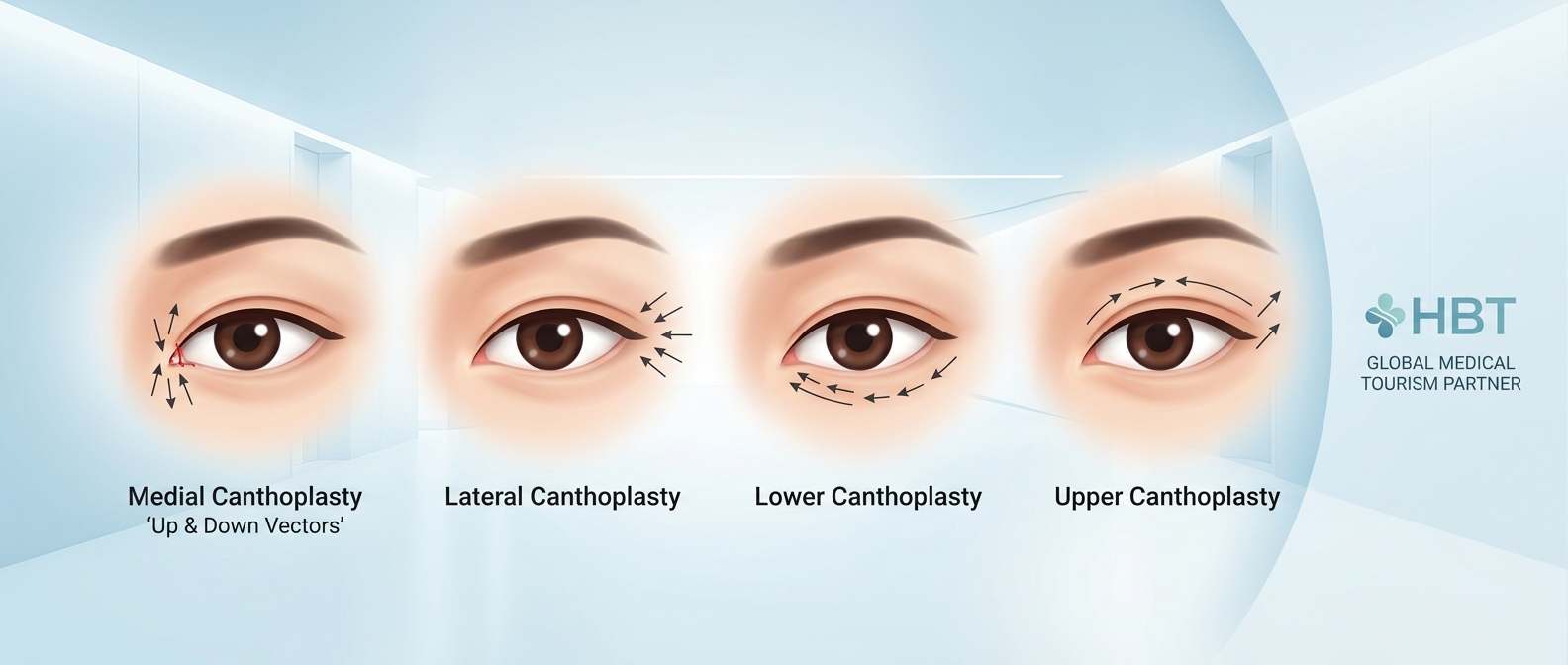
Canthoplasty is a surgical procedure that surgically redesigns the inner and outer angles and positions of the eyes. In Korea, the following four procedures are systematized.
1. Medial Epicanthoplasty
This surgery widens the inner width of the eye by correcting the epicanthal fold that covers the inner corner (medial canthus) of the eye. It is applied when the epicanthal fold makes the eyes look excessively narrow or causes entropion. Depending on the incision method, the redraping technique, W-plasty, or Z-plasty is chosen. Korean specialists use precise suturing techniques to ensure the lacrimal punctum is not exposed after removing the epicanthal fold.
2. Lateral Canthoplasty
This surgery widens the eye opening toward the outer corner (lateral canthus). It creates an effect of lengthening the eye horizontally by repositioning or incising the lateral canthal tendon. When performed alone, precise suturing is essential to achieve a natural result when viewed from the outside. Excessive lateral canthoplasty can lead to complications such as drooping of the outer corner or scleral show, so correcting the appropriate amount is important.
3. Lower Canthoplasty (Lower Canthal Correction)
This opens the lower part of the eye to provide an effect that makes the eyes look larger and rounder. It is often associated with the so-called "almond eye" design, creating an impression that makes the eyes look soft and moist overall. Lower canthoplasty is a high-level procedure that adjusts the inferior lateral canthal tendon and should be performed by a specialist with sufficient anatomical knowledge and clinical experience.
4. Upper Canthoplasty
This is a procedure that adjusts the inner angle of the upper part of the eye. It corrects the eyes to look wider and more refreshed when the forehead is low or the eyes are deep-set. It is often performed in conjunction with medial epicanthoplasty or double eyelid surgery.
Choosing an Eye Design: The Difference Between 'Almond Eyes' and 'Cat Eyes'
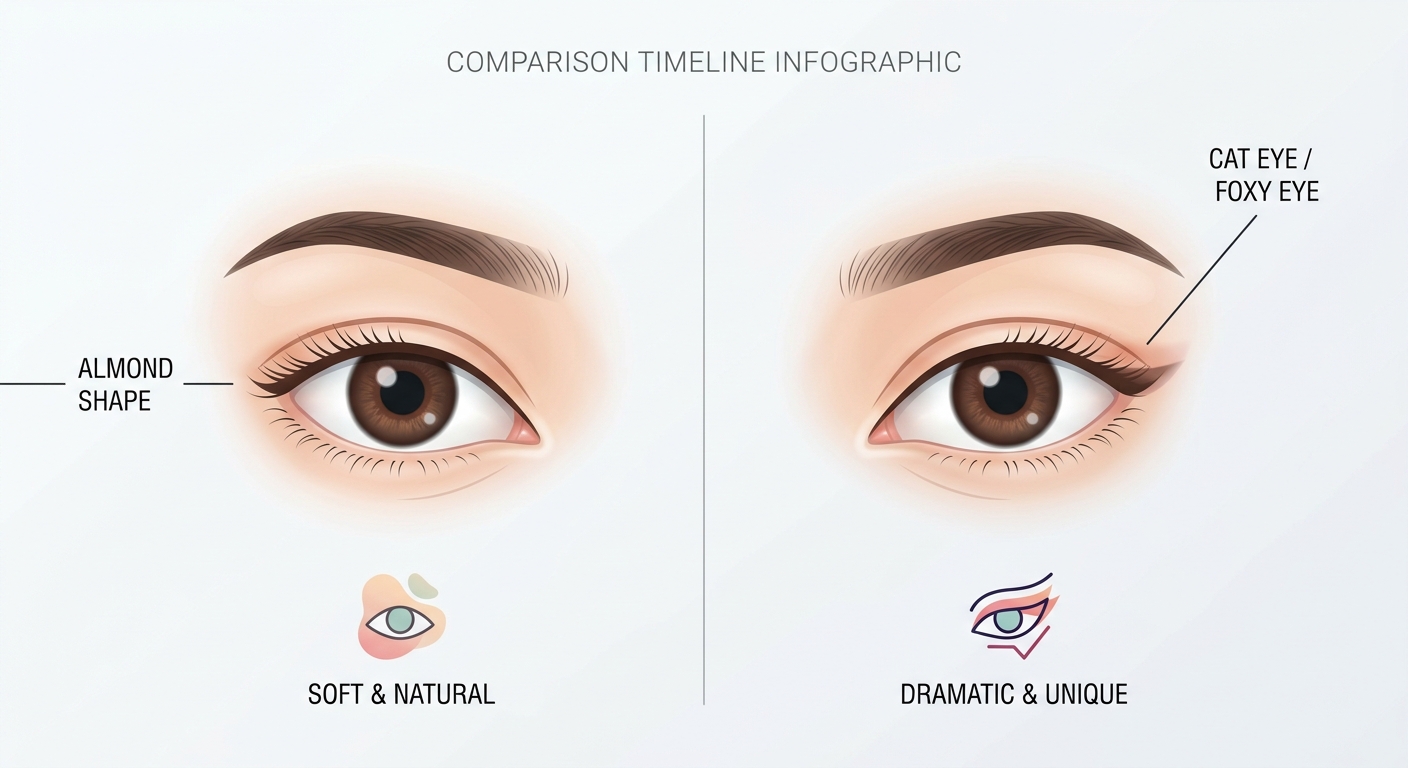
The first thing discussed in a consultation with a Korean specialist is the desired eye shape. It is broadly divided into two directions.
Almond Shape creates a soft and harmonious impression by naturally lowering the lower boundary of the eye and making the outer angle gentle. It has high compatibility with Asian facial proportions and shows stable long-term results. Korean specialists with extensive clinical experience prioritize the almond shape for patients with round and soft facial features.
Cat Eye (Foxy Eye) creates a dramatic eye shape with an upturned outer corner by pulling the lateral canthus upward. While popular among those who want a unique impression, it is a structure where constant tension is applied to the lateral tendon, so the tissue may relax over time, requiring revision surgery. Also, it may conflict with Asian mid-face proportions, so careful judgment is required.
Candidates for Surgery and Cases Requiring Caution
The specialists connected by HBT carefully evaluate the patient's eye anatomy and overall health status during the consultation stage. The criteria below are for general reference, and the final decision must be made through a professional medical consultation.
Cases Where Surgery Can Be Considered
- Adults aged 18 or older who have completed growth
- Cases where the eyes are too narrow due to epicanthal folds or there is discomfort due to pressure on the lacrimal punctum
- Cases where there is psychological discomfort due to severe eye asymmetry
- Cases where one wishes to correct an unnatural result after previous double eyelid surgery
- Cases where dry eye syndrome is mild and overall health is good
Cases Requiring Careful Review or Where Surgery May Not Be Suitable
- Severe dry eye syndrome or keloid-prone skin
- Underlying ophthalmic conditions such as thyroid eye disease or ptosis
- Blood clotting disorders or currently taking immunosuppressants
- Pregnant or breastfeeding
- Expecting unrealistic results
- Intending to have repeated surgeries on the same area within a short period
Post-Surgery Recovery Timeline – A Realistic Schedule for Foreign Patients
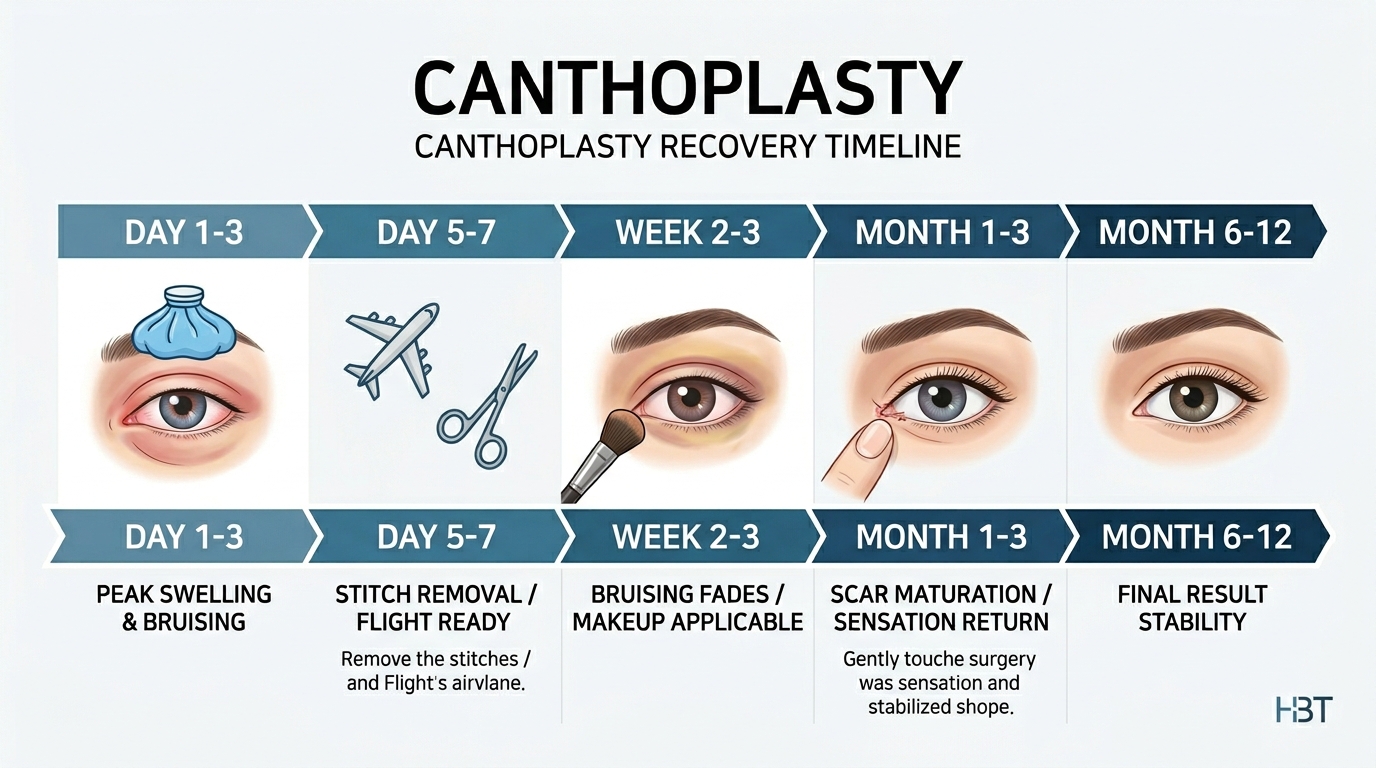
If you are a foreign patient visiting Korea, please refer to the recovery timeline below when planning your return flight.
- Surgery Day ~ Day 3: Swelling and bruising are at their peak. Cold compresses and sufficient sleep are recommended. Headaches or a foreign body sensation are normal reactions.
- Day 5~7: Stitches removal. Most patients visiting Korea consider returning home at this point. Initial swelling subsides significantly, but redness around the eyes may still remain.
- Week 2~3: Visible bruising almost disappears, and some slight swelling and scarring may remain. It becomes possible to cover with makeup.
- Month 1~3: Scars mature and the final shape begins to settle. This is the period when the sensation of the skin around the eyes fully recovers.
- Month 6~12: Scars become almost invisible and the surgical results stabilize. Final results are usually evaluated after 6 months.
A stay of at least 5–7 days before returning home is recommended, and for long-haul flights, it is advisable to prepare plenty of artificial tears to prevent in-flight dry eye syndrome.
Major Risks, Complications, and Aftercare
Every surgical procedure carries a certain level of risk. The specialists connected by HBT minimize risks based on sufficient surgical experience and proven safety protocols, but patients must also understand the following.
Known Potential Complications
- Worsening of Dry Eye Syndrome: If the eyes are opened wider, tear evaporation may accelerate. Pre-surgery dry eye testing is important.
- Scar Formation: Visible scars may remain if the patient is keloid-prone or the incision direction is inappropriate.
- Canthal Rounding: Can occur with over-correction of lateral canthoplasty, which may require revision surgery.
- Lacrimal Punctum Exposure: The lacrimal punctum may be excessively exposed if medial epicanthoplasty is over-corrected.
- Scleral Show: The white of the eye may be abnormally visible if lower canthoplasty is over-corrected.
- Infection and Bleeding: Very rare but possible, and minimized by the infection control protocols of HBT-affiliated hospitals.
HBT Aftercare Program
- Guidance on regular post-surgery follow-up schedule (Day 1, 3, 7 as standard)
- Support for remote medical consultation after returning home
- Prescription of medication for swelling/scar care and international shipping guidance
- Support for direct communication with the attending surgeon in case of complications
Korean Canthoplasty Costs – A Realistic Guide for Foreigners
Costs vary significantly depending on the scope of surgery, hospital location (Gangnam/Sinsa-dong, etc.), and the surgeon's experience. The ranges below are general reference figures for the Gangnam area of Seoul for 2025–2026. Please confirm the exact quote through a hospital consultation.
- Medial Epicanthoplasty (Single): Approx. 400,000 ~ 800,000 KRW
- Lateral Canthoplasty (Single): Approx. 500,000 ~ 1,000,000 KRW
- Lower Canthoplasty (Single): Approx. 600,000 ~ 1,200,000 KRW
- Complex Canthoplasty (Combining 2~3 types): Approx. 1,500,000 ~ 3,500,000 KRW
- Double Eyelid + Canthoplasty Package: Approx. 2,000,000 ~ 5,000,000 KRW
For foreign patients, VAT refund benefits may apply to medical services for medical tourism purposes. Please check in advance through HBT Concierge.
Essential Information for Foreign Patients
What to Check When Choosing a Hospital
- Whether the surgeon holds an Oculoplastic Surgeon or Plastic Surgery Specialist certification
- Whether there are sufficient clinical cases of canthoplasty alone or eye surgery
- Availability of foreign language (English/Chinese/Japanese, etc.) consultation and interpretation services
- Scope of responsibility and revision surgery policy in case of complications
Questions to Ask During Consultation
- "What type of canthoplasty is most suitable for my eye structure and why?"
- "How much can the lacrimal punctum be exposed after medial epicanthoplasty?"
- "Is remote aftercare possible after returning home?"
- "When can I board a plane after surgery?"
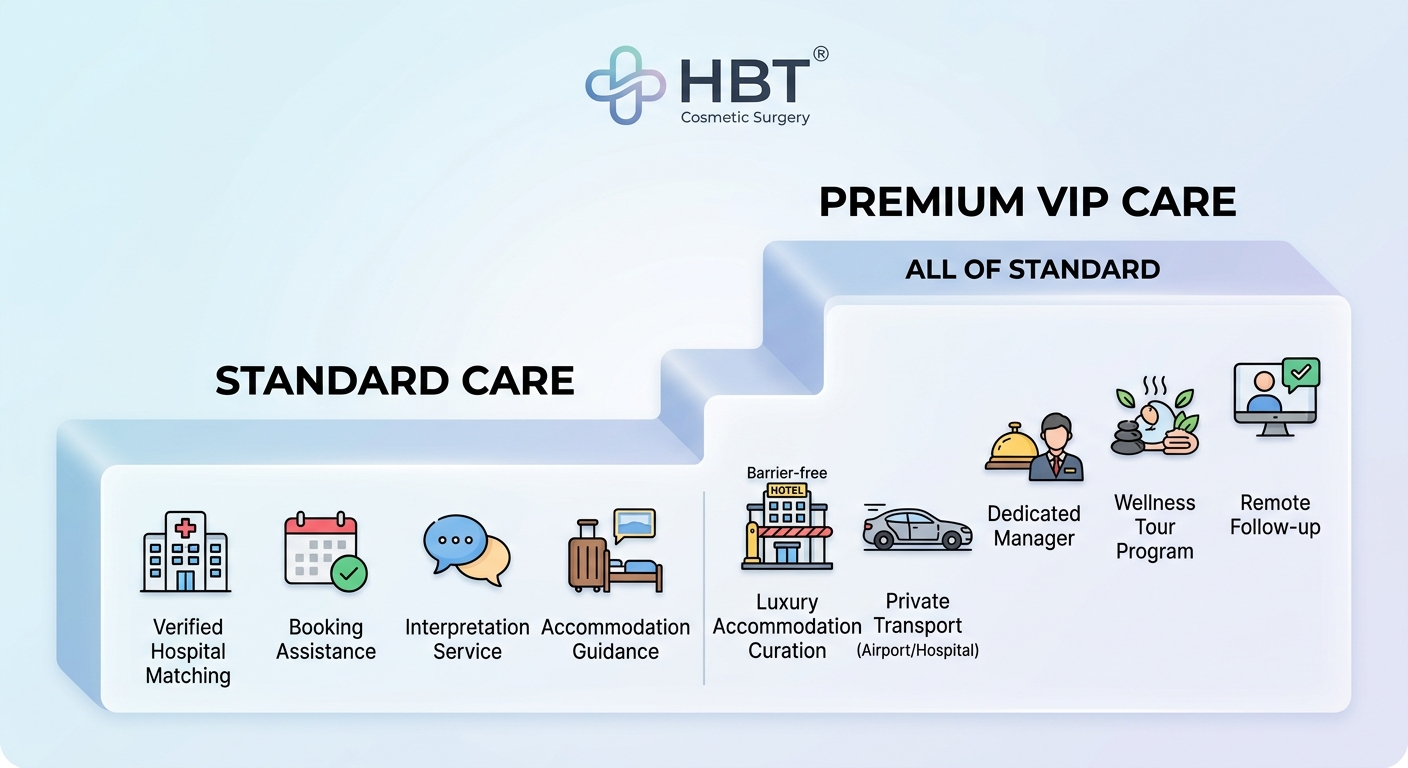
HBT Concierge Service – From Standard to Premium VIP
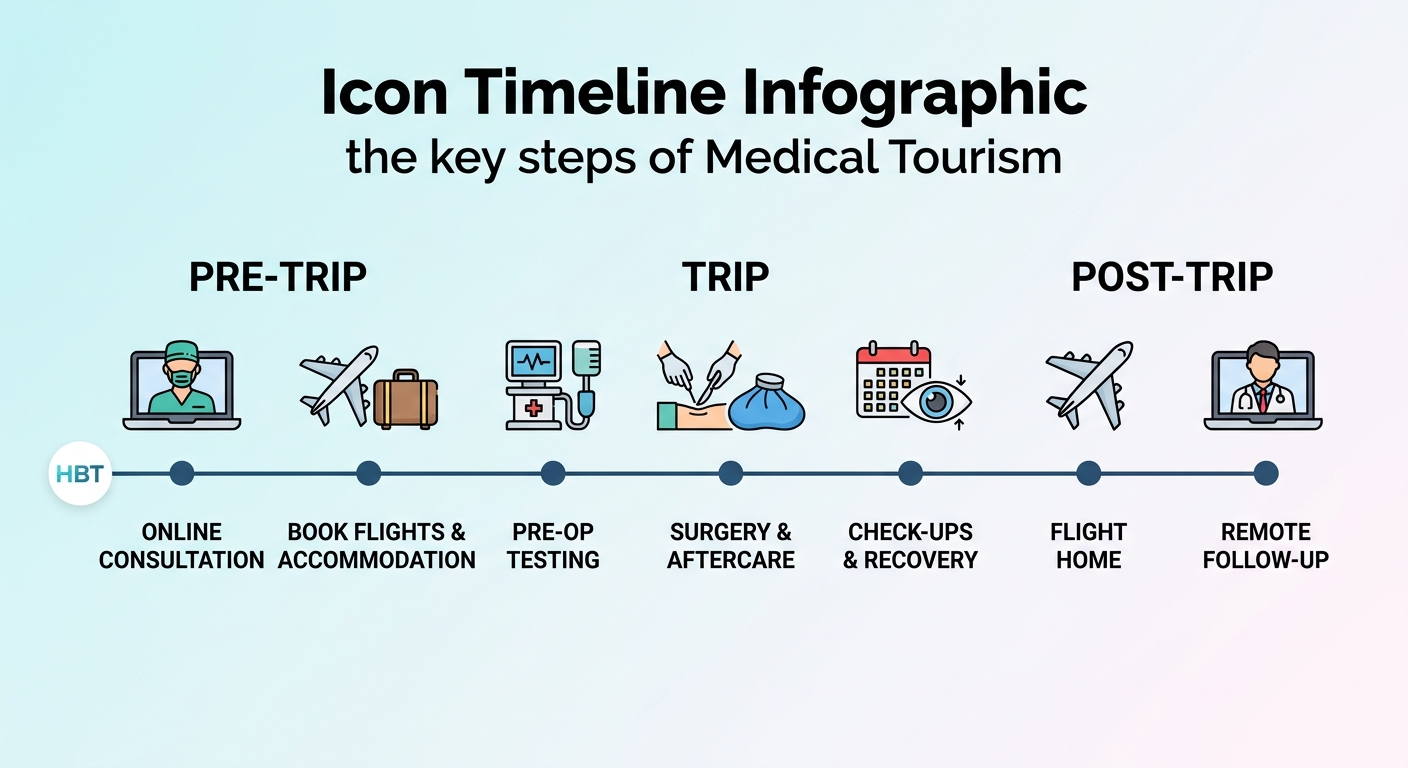
HBT (Holistic Beauty Tour) provides end-to-end care for foreign medical tourists visiting Korea. Services can be selected in stages according to the patient's budget and needs.
- Standard Care: Verified hospital matching, medical appointment booking, interpretation support on the day of surgery, and accommodation booking guidance. Basic peace-of-mind care for those considering Korean medical tourism for the first time.
- Premium VIP Care: Includes barrier-free luxury accommodation curation, dedicated airport pickup/transfer vehicles, a dedicated manager before and after surgery, wellness tour programs for accompanying family members, and remote aftercare coordination after returning home.
Various options between Standard and Premium can be combined, allowing patients—from those traveling alone to those with family—to choose the level of support that fits their situation.
Closing
Canthoplasty is a delicate surgery that can change the overall impression of the eyes with a small incision. It is not just a surgery to "make the eyes bigger," but a process that absolutely requires the in-depth judgment of a specialist to find a design that fits the individual's eye anatomy and facial proportions. HBT is with you from your consultation to post-return care through a network of verified Korean specialists with extensive clinical experience.
CEO
Premium Global Connector: VIP Protocol · Medical · Beauty